
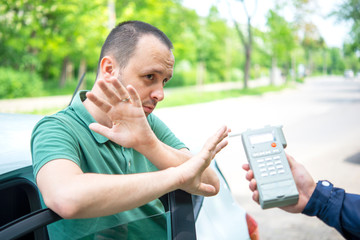
If you get pulled over by a police officer who suspects that you are driving under the influence of drugs or alcohol, you may be asked to perform a field sobriety test. These tasks help officers evaluate a driver’s impairment, but are they legally required? It is crucial that you understand your rights and legal obligations anytime you operate a vehicle on public roads. If you are wondering whether you can refuse a field sobriety test in New Jersey, continue reading and reach out to an experienced Mercer County DUI lawyer.
What is a Field Sobriety Test?
A field sobriety test is a series of actions that a police officer tasks a driver with to assess their sobriety and determine whether or not they are intoxicated by drugs or alcohol. Driving under the influence is illegal, and field sobriety tests are just one way that an officer can evaluate whether an individual is inebriated or not.
There are three standard field sobriety tests approved by the NHTSA (National Highway Traffic Safety Administration).
- Horizontal Gaze Nystagmus: The individual follows a moving object with their eyes to detect involuntary jerking as the eyes gaze side to side which is a sign of drug or alcohol use.
- Walk and Turn: The individual walks heel to toe in a straight line, turns on one foot, and walks back the same way they came. This requires simultaneous focus on mental and physical tasks.
- One-Leg Stand: The individual stands on one leg and counts out loud for a period of time to evaluate balance as well as concentration.
These three tests are designed to evaluate a driver’s physical and cognitive abilities while under stress.
Can I Refuse a Field Sobriety Test in NJ?
Yes, you can refuse to submit to a field sobriety test in New Jersey. Chemical tests, like a breathalyzer or blood test, are required by law as the act of driving a motor vehicle on public roads is implied consent. If you refuse one of these tests, you will receive an automatic penalty, which can include a license suspension, fines, insurance surcharges, mandatory use of an IID, and more.
However, there is no law requiring that a driver submit to a field sobriety test. Many people choose to refuse because of the uncertainty in the test’s results. According to the NHTSA, the horizontal gaze nystagmus test is approximately 77% accurate by itself, and the walk and turn and one leg stand tests are about 68% and 65% accurate, respectively. These are not the most reliable tests, yet the results can be used as evidence in a DUI court. Refusing may be a good option if you are unsure of your ability to perform well, regardless of your sobriety.
It is important to note that refusing to take these tests will not necessarily stop you from being arrested. For more information and skilled legal advice, reach out to an experienced criminal defense attorney today.